

Eduardo Viezca is a dissertation-phase student in the Integrative Healing and Practices Ph.D. program at Pacifica. He is also a Mayan Priest, an emerging scholar-activist-creative, and a licensed therapist in private practice. I鈥檓 delighted to find out more about his work and life experiences. 听
Angela Borda: Thank you so much for speaking with me. I鈥檇 love to hear more about your background and the formative events in your life.听
 Eduardo Viezca: I should start off by saying that I have always existed in an in-between space. I grew up in Juarez, Mexico, and at the age of three, my parents moved us to Denver, where I spent most of my childhood. I would travel to the Mexico side during the summer and at every opportunity I had. There was something important, difficult yet transformative about crossing the border that I wasn鈥檛 able to put into words at that young an age, and that feeling continues with me to this moment.听
My dissertation heavily focuses on the works of Gloria Anzald煤a, and she talks about the between spaces, the 鈥渂etwixt and between.鈥� That idea of being a liminal being has been influential for as long as I recall. My Mexican American immigrant identity never fully fit into one hegemonic space. Growing up, my queerness and navigating it was a big aspect of my life in a Mexican, Latinx culture. And I felt that being a first-generation, immigrant college graduate was trying to integrate me into this normative, hegemonic culture that I wasn鈥檛 fully a part of. So that imagery of the liminal person who crosses in between spaces has always been present for me. 听
Angela: How did you find Pacifica and what led you here, to the Integrative Healing and Practices program?听
Eduardo: I did the traditional four year-track for my undergraduate studies, and graduated when I was 22, in environmental design and a minor in ethnic studies. I had some interest in the arts but coming from this working class, immigrant mindset, there was an expectation that I was going to college and having a career that for my family meant a doctor, lawyer, or accountant. For me, I chose architecture because I was good at math, and I always liked something with a creative component. How I got from that to being a dissertation student at Pacifica is a long story! I will say, however, that activism has served as a golden thread throughout the course of my life. In my undergrad I was a student activist, and through those interests I decided to do work in the public school system, where I saw the need for mental health support. After a few years of working in social work nonprofits, I realized that within the social work world there was something missing about indigenous or spiritual values. There was a spiritual side my soul was yearning for, and that鈥檚 where Pacifica came in. 听
Angela: What has your experience of Pacifica been so far and how is it influencing your professional work?听听
Eduardo: Pacifica has been transformative. My experience in my program has been supportive and validating. There鈥檚 a lot of affinity between my professors and me. I鈥檝e made lifelong friends and partnerships within my cohort. I feel like my experience and training at Pacifica is leading me to something big. 听
Angela: Can you share with us a little about your dissertation or is it top secret?听
Eduardo: It鈥檚 been very full circle with my undergraduate work. I was a sophomore in college when I first read Borderlands by Anzald煤a, which was the bible for a lot of queer activists and Chicano students. It鈥檚 been very synchronistic to see how connected Gloria鈥檚 work has been to the depth tradition. She was very well versed in the depth psychological, and I think she even taught at Pacifica at some point. My dissertation places decolonial studies and Jungian studies in a dialogue and uses Gloria鈥檚 work to hold the tension of opposites so that something transformative can emerge.听
Angela: Most of your professional work focuses on love, and you call yourself the 鈥淟ove Coach.鈥� What brought love to the forefront of your work?听
Eduardo: Being a survivor of childhood trauma and adverse life experiences are connected to the work I do now around love. For me, it comes down to the transformation that happens when we learn how to love ourselves, how to be in relationship with others, to feel our heart expand. Maybe I鈥檒l add a piece about that to my dissertation, the importance of the heart chakra and cultivating love and healing the colonized wounded healers. My dissertation is more philosophical and theoretical than the typical psychology dissertation. Yet it is helping me make theoretical contributions that are linked with my practice. I do practical things with my couples therapy, like conflict mediation, tools on self-soothing and down-regulating one another, reminding them of why they decided to engage in the first place. That鈥檚 the day-to-day practical expression of the work. The dissertation is a more philosophical, theoretical project.听听
Angela: I understand that one of your favorite pursuits is traveling the world and visiting sacred sites. If you had to pick one, which sacred site have you been to that had the biggest impact on you, and how do sacred sites affect your work?听
Eduardo: The most profound experience I鈥檝e had thus far at a sacred site was back in Tikal. The first time I went was early in 2023, during the Mayan new year. This was part of my initiation for becoming a Mayan priest. Tikal is connected to the lineage that I鈥檓 blessed to be a part of. When you鈥檝e been initiated into certain teachings and you鈥檝e been able to do ceremony at those sacred sites, it鈥檚 a beautiful experience.听
Angela: I didn鈥檛 realize you were a Mayan priest. What is that process like?听
Eduardo: The cheesy answer is that you don鈥檛 decide. My mentors see the training as starting before you鈥檙e even born, and life prepares you to get to that spot. From a pragmatic level, it has involved a lot of synchronicities. I met the holder of my lineage when I was an undergraduate student. I brought him in for a talk at my college. I found it very easy to engage with this indigenous elder from Guatemala at the time. He needed a translator, and I spent a day with him translating. After that experience, I鈥檇 run into him every few years in different places. In 2017, I started apprenticing with my current mentor and after two years of working with her, I found out that she鈥檇 been initiated by this same man. Eventually both of them initiated me into the lineage. So it鈥檚 been synchronistic and a long time coming. I became a Mayan priest earlier this year. I鈥檝e been to Guatemala and Tikal several times. 听
Angela: Does that intersect with your work at Pacifica?听
Eduardo: My Jungian and depth psychological training have helped me deepen into my teachings. They鈥檙e very complimentary. Even concepts like amplification and working with images. They have helped me deepen into my Mayan teachings and to be in relationship with them in a way that wouldn鈥檛 have been possible otherwise.听听
Angela: Do you have any upcoming projects or current areas of focus that you鈥檇 like to share with us?听
Eduardo: I鈥檓 getting my hands dirty with teaching this year. I designed a course last spring that I taught on transference and reflexivity. I鈥檓 in the process of designing s foundational course for working with queer youth. Designing those classes has been a lot of work but a good experience so far.听听
Angela: Thank you so much for a glimpse into your world and work. I wish you the best of luck with finishing your dissertation.听
To learn more about Integrative Therapy and Healing Practices at 51社区, click here.

Eduardo Viezca is a Mayan Priest, an emerging scholar-activist-creative, and a licensed therapist in private practice. His scholarly interests explore the psychological impacts of European colonization, with specific attention placed on the impacts on the coloniality of gender, race, sexuality, family, and spirituality. Before beginning his doctoral studies at Pacifica, Eduardo received his bachelor鈥檚 degree in environmental design from the University of Colorado Boulder and his master鈥檚 in social work from the University of Denver. He joined the faculty at the Denver Family Institute in 2024 where he designed and taught graduate courses on countertransference, reflexivity, and coloniality in therapy. He has presented interdisciplinary scholarly papers at international venues such as The Journal of Analytical Psychology鈥檚 International Congress, the Harvard School of Divinity’s Program for the Evolution of Spirituality, and the Latin American Studies Association鈥檚 International Congress. He and his husband Javier currently live in New York City.听
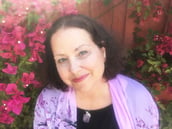
Angela Borda听is a writer for 51社区, as well as the editor of the听Santa Barbara Literary Journal.听Her work has been published in听Food & 51社区, Peregrine, Hurricanes & Swan Songs, Delirium Corridor, Still Arts Quarterly, Danse Macabre,听and is forthcoming in听The Tertiary Lodger听and听Running Wild Anthology of Stories, Vol. 5.
