

![Juliety_painting_Heart[5739]](https://www.pacificapost.com/hs-fs/hubfs/Juliety_painting_Heart%5B5739%5D.jpg?width=270&height=203&name=Juliety_painting_Heart%5B5739%5D.jpg)
Evolution and Growth in the Integrative Therapy and Healing Program: An Interview with Juliet Rohde-Brown, Ph.D.
Juliet Rohde-Brown, Ph.D. is the Chair for the听Depth Psychology: Integrative Therapy and Healing Practices听doctoral specialization program at 51社区. I鈥檓 delighted to speak with her to hear about the program鈥檚 evolution and growth.
Angela:听You鈥檝e been the chair of Integrative Therapy and Healing for five听years now, and before that, taught at Pacifica as the director of clinical training in the clinical program since 2014. From your perspective, how has Pacifica evolved since you began teaching here? Why is this an exciting time to be teaching and studying at Pacifica?
Juliet:听Pacifica鈥檚 bandwidth is broadening to include deeper inquiry into cultural complexes, nonlinear dynamics, and addressing more inclusive frameworks from wisdom traditions outside of historical Western colonialized contexts. Expanding from the clinical consulting room into community contexts, while holding the depth psychological foundations that Pacifica was built on is an important movement toward integration. Pacifica has always had an international following and appeal; weaving in voices of diverse authors and practitioners into the curriculum and into teaching roles is a focus for our depth specialization as is the student voice.
The body of learners in Integrative Therapy is very diverse and this makes for a very rich environment for learning, discussions, and nurturing relationships. The rich diversity and interests are reflected in our students鈥� dissertation topics too. Many are focusing on decolonization, on Eco therapeutic topics, creativity and the arts in ancestral healing traditions of the world, including the archetypal and what emerges from dream states. They are looking at intergenerational trauma, cultural aspects of such, and what indigenous scholars and elders can offer from their own wisdom traditions, while learning how not to appropriate. The majority of our students are clinicians who are already licensed, and they are exploring ways to deepen their practices by going further into the exploration of interpersonal neurobiology, the nonlocal aspects of consciousness, and the implications for understanding the intersubjective field, Jungian and post-Jungian distinctions, personality development, the ways in which dreams are important messengers of psyche and soma and the cultural contexts of suffering, to name but a few of the areas of inquiry.
Angela:听What vision do you hold for your program over the next year? Are there any changes afoot?
Juliet:听Along with expanding on the humanistic values of what I have mentioned above, we鈥檙e shifting to a new residential format, so that by 2024, all three cohorts will be coming to campus once per quarter rather than three times per quarter. We are titrating into this format starting with the 2022 cohort. The course content is remaining the same and we will expand our use of D2L and zoom for interactive posting and discussions, attending to the balance and requirements for synchronous and asynchronous learning. The impetus for this minor shift was to open this depth specialization to a wider international student base. There are extreme climate experiences that are happening more and more, making it difficult to get here sometimes. A reduction in travel to and from campus will help us mindfully attend to this reality while also attending to the importance of reducing the carbon footprint. The program may be more accessible to working adults as well. Other Pacifica programs and specializations have observed this format and the feedback is positive. We only have one entry per year, in the fall, and we鈥檙e currently accepting applications for that.
Our program has nurses, licensed psychotherapists, pastors, acupuncturists, those who work in organizational settings鈥� an array鈥攂ut most are clinicians. We want them to have some kind of applied work accredited by their own profession. They may then bring their reflections on how the program is impacting their professional lives into their practice consultation groups, which are small clusters of learners who meet with a particular faculty member/mentor several times a quarter around certain themes and with assignments. In some cases, we ask applicants to do some foundational readings in certain areas of depth psychology before they enter this doctoral specialization. They must have a master鈥檚 degree in order to be considered as well.
 One thing I would like to expand upon is to bring our learners鈥� voices out into the local community. It requires finding some venues outside of Pacifica itself. For instance, a few years ago we hosted an evening of presentations at the Alcazar Theater. Chumash elder, Art Cisneros, opened with a blessing, and three members of the cohort who had just completed their oral comprehensive examinations, presented their topics. Then we closed with Dr. Ginger Swanson, one of our adjunct faculty, who read a beautiful original eco-feminist story, which really moved the attendees. I鈥檇 like to do that again and bring music into the mix. We have so many talented people who enter the DPT specialization who, along with having full careers in the healing arts, are musicians, artists, poets, writers, and dancers. I am quite inspired by embracing more transdisciplinary aspects into Pacifica鈥檚 programs, including, but not limited to the arts and sciences. Our program has hosted a virtual 鈥渃offee hour鈥� on Wednesday mornings for the past year or so, inviting students, faculty, and staff across programs for spontaneous conversation and connection. I have often invited faculty to share some of their writing followed by discussion and on one occasion, learners from our second-year cohort in the DPT program facilitated a peace meditation for a world going through difficult times.
Angela:听Are there any student projects that stick out in your mind as being representative of the quality of inquiry and scholarship in your program?
Juliet:听One example among many is Heesun Kim, a Fulbright scholar, whom I believe you interviewed before she left for Jeju Island, where she is finishing up her dissertation, working with South Korean shamanic practices to explore intergenerational trauma and the grief process. We have another who is going to be traveling to Nepal听and working with the Institute for Buddhist studies affiliated with Kathmandu University.听She has been very involved with Lama Tsultrim Allione and the Tara Mandala retreat center, and she is going to be doing work on practices that foster compassion. A couple of women are looking at ancient African embodiment traditions in feminist contexts, and one is exploring that from a somatic perspective. Another has been very involved with听Capoeira Angola in the African Brazilian tradition.听Another is from Vietnam, and researching goddess traditions in Vietnamese contexts and the psychological impact on current times. Another has focused on听Liberation Psychology as a guiding theoretical stance and will interview artists from BIPOC communities who use their art as activism to honor the lived experience of what it means to create activist art. In this study, the term 鈥渕estiz鈥� is used to remove gender bias in language and to honor the nonbinary.
The word听integrative听can be envisioned in different ways. One way of understanding the essence of the term 鈥渋ntegrative鈥� is certainly the integrative process that occurs during individuation, during psychological and spiritual growth and synthesis. The other way of envisioning the term 鈥渋ntegrative鈥� is via an explicit intention to engage in transdisciplinary inquiry as an approach to theory and praxis. It鈥檚 time to revisit the traditional western ways and invite other voices into pedagogy.
Angela:听Are there any particular ideas or new focuses of study in depth psychology at Pacifica that hold interest and inspiration for you at the moment? Any shifts in the curriculum to reflect this?
Juliet:听Some recent developments with our core faculty in the program specialization are that Dr. Fanny Brewster is teaching a special topics class on the feminine body and non-Western traditions and is coming out with a new book on dreaming. Dr. Lionel Corbett has completed a book titled听The God Image听and is now writing a book on quantum physics and depth psychology. In terms of healing traditions, there are some burgeoning studies on the biofield and in nonlinear dynamics, expanding how intersubjectivity can be understood to include nature and the non-human. Dr. Elizabeth Nelson teaches a course titled 鈥淧syche, Soma, Cyborg,鈥� along with overseeing the research component of the program. Dr. Pat Katsky just published an article based on a qualitative research study she conducted around insights from the dreams of depth practitioners who also engage in meditation practices. We have a course that integrates complexity and emergence frameworks, Jungian approaches, and somatic aspects around trauma. We make sure that our indigenous psychology special topics class is actually taught by indigenous scholar-practitioners who emphasize the importance of non-appropriation.
We have wonderful adjunct faculty members like Dr.Terry Marks-Tarlow, who focuses on interpersonal neurobiology and creativity in clinical contexts and fractal epistemology. Dr. Indhushree Rajan is one of our adjuncts who has put together a non-profit organization that builds support for reducing human trafficking. This organization emerged from her work with women who found themselves in the brothels of India. And our Program Administrator, Dr. Evergreen Hericks, who is a wonderful support for our adult learners, is an artist involved in an annual community-based mandala that the members of the Ojai community create together. You will also find delightfully surprising small decorations around the campus that she鈥檚 offered, a painting here, a tree unicorn there, an altar at the front door during sessions, many generous and thoughtful blessings. During sessions, we have often offered guided movement from visiting practitioners. Currently, one of our first-year students who have a strong background in this area, has been offering intuitive movement gathering on Friday morning before breakfast. We often take time for opening a class or a meeting with a brief meditation as well.
Angela:听You鈥檙e the author of听Imagine Forgiveness,听as well as several chapters in other books, and articles in journals. What are you currently researching, studying, and teaching, and are any new projects on the horizon?
 Juliet:听I just co-presented at a conference, and the title was 鈥淢usic as a Window to the Imaginal: Through Dreamtime and Waking Reverie.鈥� I鈥檝e written and presented a couple of pieces on the child archetype. I did a presentation inspired by some compositions by the late composer Erik Satie in the context of a dream and surgical procedure. I have a sabbatical coming up that will focus on the creative process. In terms of personal projects or endeavors, one of the things I like to do is to create mini paintings with fluid acrylics without planning any resulting images ahead of time. I appreciate not knowing what images will emerge. I do that in a meditative way, I鈥檝e often experimented with painting in my lifetime, but this particular form started to emerge about four years ago. I also like to engage in contemplative photography in nature with just my iPhone. I will feel moved by the way the sunlight touches the end of a leaf, for instance. Writing and singing sacred songs is another pastime. These are things I do as part of my self-care, yet they also inform the way in which I understand processes within depth psychology, phenomenology, and spirituality. I validate these types of experiences with the learners in our program as well.
***
鈥淲e Are 51社区鈥�
Lyrics by Juliet Rohde-Brown
听
Acorn underneath a tree
This inspires me
A deeper way to see
Each day intending on the path
To walk along the map
Of compassionate acts
And so we circle round and round
Samsara learning on sacred ground
Listening to the silent sound
Of coming home
We are home
听
We know all there is to know
When moving fast to slow
And trusting letting go
You鈥檙e me
And I am there in you
And tree is in us too
So let鈥檚 expand our view
So may we find beginners鈥� mind
And may we leave the endless nights
And may we be free of painful miles
We鈥檙e coming home
We are home
听
Breathing home
***
Angela:听Scholarship doesn鈥檛 occur in a vacuum, and certainly an important part of academia is the sharing of ideas, especially in the context of conferences and workshops. You take the extra step of encouraging your students to participate in conferences and accompanying them. What recent ventures have you made in that regard?
 Juliet:听I鈥檓 accompanying three of our learners to the humanistic psychology conference in March in Albuquerque. All three of them are ambassadors to the society for humanistic psychology; we鈥檙e presenting a panel with the umbrella title of 鈥淓mbodied Care across Divides.鈥澨齇ther learners have submitted and been accepted for presentations at this conference as well. I, along with 5 DPT students and one alumna, presented at the Jungian Society of Scholarly Studies conference in Seattle this past summer. A woman from our first-year cohort also offered an experiential hour with a sound bath that was very well received. There were windows where these types of experiential components were invited. I consistently encourage Pacifica students to submit their material for conferences. One of our students just presented at the听2022 IAJS Virtual Conference, Jung and the Moment. Another presented at the ISPS National conference with a presentation titled 鈥淭ransformational Processes: Engaging, Witnessing, and Holding the Somatic Image.鈥� These are just a few examples of conference presentations that our learners have been involved in. Thank you for asking about that.
Angela:听Thank you for speaking with me, and also thank you for the wonderful job you do as the Chair of Integrative Therapy and Healing.
Angela Borda听is a writer for 51社区, as well as the editor of the听Santa Barbara Literary Journal.听Her work has been published in听Food & 51社区, Peregrine, Hurricanes & Swan Songs, Delirium Corridor, Still Arts Quarterly, Danse Macabre,听and is forthcoming in听The Tertiary Lodger听and听Running Wild Anthology of Stories, Vol. 5.
![Juliet2[5740]](https://www.pacificapost.com/hs-fs/hubfs/Juliet2%5B5740%5D.jpg?width=120&height=150&name=Juliet2%5B5740%5D.jpg)
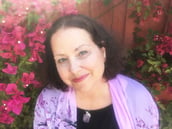
Juliet Rohde-Brown, Ph.D.听is the Chair for the听Depth Psychology: Integrative Therapy and Healing Practices听doctoral听specialization听program at 51社区. She has been teaching psychology in higher education venues for over 20 years. Her clinical doctoral internship was completed at the C.G. Jung Institute of Los Angeles and she has worked clinically in private practice and hospital settings. Before becoming a licensed clinical psychologist, she did integrative work as a hypnotherapist and trained in neuropsychological assessment and in-patient settings, among others. She is a board member with the nonprofit organizations, Tierra Sagrada and Restorative Justice Resources and serves as a mentor with the Spiritual Paths Foundation. She has presented on psychological and interspiritual topics internationally, led and co-led retreats and workshops, and her book is entitled听Imagine Forgiveness. Her peer reviewed journal articles have been featured in such publications as the听Journal of Humanistic Psychology, the听Journal of Divorce and Remarriage,听Sutra 鈥� The Thread: Journal for Research on Education, Psychology, Traditional Sciences and Systems, Health and Consciousness听and听Psychological Perspectives, and she has contributed book chapters to听Probing the Boundaries Series: Vol. 172- Forgiveness: An interdisciplinary dialogue (Interdisciplinary Press), Humanistic Psychology and Diversity (Routledge), and 鈥淟ike A Child Would Do鈥�: A Multidisciplinary Approach to Childlikeness in Past and Current Societies (Universitas Press).
