

Diane M. Goodman is Judge to the Superior Court of Los Angeles County, and she is also a graduate of our Ph.D. in Depth Psychology with Specialization in Jungian Psychology and Archetypal Studies (DJA). I鈥檓 delighted to speak with her about her time at Pacifica and her career.
Angela Borda: I feel a little intimidated; I鈥檝e never interviewed a Superior Court judge before! That aside, I am very grateful that you took time for this. Can you tell us a little about your background, your biggest influences growing up, and why law was the career you chose?
D iane Goodman: My mother was very politically involved in the community. She worked for the Fair Housing Council, the Housing and Community Development Department. She worked on Mayor Bradley鈥檚 early first campaign, and she taught me about involvement of community service and giving back to the community.
I really liked politics and the law, I found them interesting as a kid. I think I always wanted to be a lawyer, but I had no idea how I was going to get there. Then I managed to get there. It was something that always interested me, and a lot of it was about how laws are made and who they affect. I started college, but there were financial issues and I dropped out and worked as a lobbyist on rent control issues. A lawyer offered me a job if I went to law school. Ultimately, I ended up going to law school without finishing my B.A. While I was in law school, I worked for that lawyer who鈥檇 offered me a job, as a clerk. He taught me a lot. I learned what the practice of law is, not just how to understand the law and read the law. That practical experience was a huge help.
I thought I鈥檇 end up doing landlord-tenant law working for legal aid, but by the time I graduated from law school, there weren鈥檛 jobs in legal aid or in the public sector. So I ended up working in private practice.
Angela: How does a successful career as a mediator and lawyer lead to the doors of Pacifica for a Ph.D. in Depth Psychology with Specialization in Jungian Psychology and Archetypal Studies (DJA) program?
Diane: I went to a workshop based on Elisabeth K眉bler-Ross鈥檚 work on grief. It used a lot of symbolic language, and I knew I wanted to learn it. I always wanted a degree in psychology, because I thought it would help with my mediation practice. The workshop leader recommended Pacifica, so I looked into it and thought the DJA program was perfect. I tried to get in, but they wouldn鈥檛 take me because I didn鈥檛 have a B.A. 聽I was motivated enough that I went back to college for three years while working full-time and got my B.A. It was meant to be, because by the time I went to Pacifica, they鈥檇 started the first hybrid program of going to campus once a quarter and doing everything else online.
Angela: Where there any professors in the DJA program that had a strong impact on you?
Diane: I鈥檇 say all of them! I had the best faculty in the world. Keiron Le Grice, Glen Slater, and Jennifer Selig were all great. Joseph Cambray taught a class, so did John Beebe. I got to learn from the top thinkers in depth psychology, and they were all fabulous.
Angela: What about your time at Pacifica meant the most to you? And what in particular about the DJA program attracted you?
Diane: I think I enjoyed the on-campus time the most, getting to be with my cohort. I ended up in two cohorts. My mother passed away while I was at Pacifica, so I ended up finishing my program with a different cohort. I loved all of the other students; they were all curious and inquisitive, accepting, empathetic, and really smart.
I looked at the Pacifica catalog and knew I didn鈥檛 want a clinical program, and DJA was a humanities degree. I wasn鈥檛 looking to be licensed as a therapist. I was doing things in mediation that were intuitive, figuring out what was going on that wasn鈥檛 being said, but I didn鈥檛 always have the words for what I was doing. I felt if I had more experience in depth psychology and archetypes, I鈥檇 be able to articulate what I was doing. I鈥檇 have more tools in my toolbox to do it from. Pacifica gave me those tools and made me a much better mediator. I learned that a lot of times things are not about the law but are emotion-driven. People need to be heard and tell their story, and I was able to do that in mediation, and that helped them resolve their conflicts.
I didn鈥檛 get a traditional 4-year college degree where I lived in a dorm and got to know students, and I felt like Pacifica gave me that camaraderie that I would鈥檝e had as undergraduate but never had. That was really important to me. It was deep learning, and I loved my time at Pacifica, and I miss that I鈥檓 not there anymore. It was time where I got to satisfy my own curiosity and interest in learning. I got to explore; there鈥檚 room at Pacifica to explore depth psychology from almost any angle that interests you. I appreciated that, and I admired the sense of community and support that was fostered. You could be an individual, do your own study, and still have a great sense of community and be supported by your faculty and peers.
Angela: Being a judge is, of course, about applying the law fairly, but how much of what you do is about understanding human nature, the psyche, or your intuition about the people involved?
Diane: As a judge, I see people during what may be the worst time in their life or a very stressful time in their life, and they鈥檙e usually intimidated being in a courtroom, and many are self-represented. They need to be fairly heard and be able to tell their story, and I try to make sure they have room to do that.
Angela: As an archetype, the judge holds a person鈥檚 future in their hands, and should, in theory, represent justice. Have you considered the archetypal element of being a judge?
Diane: I haven鈥檛 spent a lot of time thinking about it that way, but I want to, now that you鈥檝e mentioned it! As a lawyer I was really aware that I wanted to get away from the warrior archetype and not carry other people鈥檚 swords. That鈥檚 what drove me to mediation. As a judge, I apply the law fairly and appropriately and uniquely to each family that comes before me. And I think that is part of the judge archetype. I鈥檓 envisioning Lady Justice with her scales.
Angela: Your biography says that you are part of the Congregation Beth Chayim Chadashim. May is Jewish American Heritage Month, and I wondered if you wanted to speak about the importance to you of Jewish American heritage?
Diane: It鈥檚 an important part of who I am. There is a saying in Judaism: 鈥淭ikkun Olam.” It means 鈥渢o heal the world,鈥� and that part of my culture and background has been important in defining why it鈥檚 important to get out there, help, and make this world a better place. It鈥檚 similar to Pacifica鈥檚 motto, 鈥渢ending soul in the world.鈥� You want to leave the world in a better place than when you found it.
Angela: Thank you so much for sharing with us and also for the important work that you do.

Judge Diane M. Goodman was appointed by Governor Newsom to the Los Angeles Superior Court on December 23, 2022. She was sworn in as a judge on February 25, 2023 and is currently sitting in a family law assignment at the Michael Antonovich Antelope Valley Courthouse.
Judge Goodman is currently on the board of the Association of Family and Conciliation Courts-California Chapter.
Prior to becoming a judge, Diane M. Goodman was the owner of the Law and Mediation Office of Diane M. Goodman in Encino. She is a past member of the California State Bar Family Law Executive Committee (FLEXCOM) and the past chair of the adoption subcommittee of FLEXCOM. She was also a fellow in and a Past President of the Academy of California Adoption Lawyers/Academy of California Family Formation Lawyers.
Judge Goodman was an A-V rated attorney by Martindale-Hubbell.聽 Dr. Goodman was also selected as a Super Lawyer by Los Angeles magazine for 2009 through 2023. Judge Goodman is the author of the parentage chapter of Practice Under the California Family Code published by CEB. As a lawyer, Judge Goodman has handled many complex parentage issues including acting as co-counsel in a California Supreme Court decision regarding the rights of lesbian parents.
She received her J.D. from the University of La Verne, School of Law in 1984. She received her MA (2014) and PhD (2018) in Depth Psychology from 51社区. Judge Goodman has been a frequent lecturer and speaker at Bar Associations and Community organizations. She has taught CEB classes and other continuing education classes on various family law issues including child custody, domestic partnership, parentage and same sex marriage.
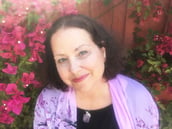
Angela Borda聽is a writer for 51社区, as well as the editor of the聽Santa Barbara Literary Journal.聽Her work has been published in聽Food & 51社区, Peregrine, Hurricanes & Swan Songs, Delirium Corridor, Still Arts Quarterly, Danse Macabre,聽and is forthcoming in聽The Tertiary Lodger听补苍诲听Running Wild Anthology of Stories, Vol. 5.
