

David Odorisio, Ph.D., currently the Chair of Pacifica鈥檚 Mythological Studies program, will be leading the launch of a new M.A./Ph.D. program in Fall 2025, in Psychology, Religion, and Consciousness. The program will be fully online, a first for Pacifica and our students. I鈥檓 delighted to hear more about this ground-breaking development. This is the final part in a two-part interview.
Angela:鈥疌ould you say a little about the uniqueness of the new Psychology, Religion, and Consciousness program? Also, is it common in academic programs to encourage students to bring personal experience to scholarly inquiry about religion? How is this different from, for example, attending a divinity school?听
David:鈥疶wenty years ago, when I was looking for Ph.D. programs, there was very little in the field of psychology and religion. There are not many accredited programs currently with doctoral degrees in psychology and religion. There are more programs emerging in consciousness studies, so that field is growing, but as far as a unique hybrid amalgamation, this is a one-of-a-kind program. If you鈥檙e going to a divinity school, there鈥檚 an applied, pastoral component. You鈥檙e going to be trained as a minister or become ordained. In some PhD programs, there is still a standard narrative that you鈥檙e not supposed to bring yourself鈥攜our own personal experience鈥攊nto your area of scholarship. That鈥檚 something that makes Pacifica and the PRC program unique; we encourage scholar-practitioner models. We want to integrate scholarship with actual lived experience for those practicing a spiritual path or whatever a student鈥檚 particular religious tradition (or lack thereof) might be. We really want to emphasize that students from all backgrounds are welcome here.听
Angela:鈥疶he PRC program description reads: 鈥淭he study of human consciousness traverses a wide range of phenomena, including advances in the psychology of the unconscious, religious and spiritual experience, near-death experience and altered states of consciousness, the mind-matter problem, as well as the broad spectrum and phenomenology of consciousness itself. [Pacifica鈥檚 PRC program] rigorously and creatively engages with such diverse and wide-ranging phenomena, and dialogically synthesizes these vital areas of academic inquiry into a unique inter-disciplinary graduate-level education.鈥� A few things catch my eye here. One is the altered states of consciousness. I know that the intersection of psychedelics and states of consciousness are of interest to many Pacifica students and faculty. Will the program encompass those kinds of inquiries?听
David:鈥疻e have one course in PRC that specifically focuses on psychedelics, framing it in dialogue with transpersonal psychology and depth psychology. Psychedelics are one of the most fascinating topics today, as many folks are choosing to directly engage with altered states of consciousness. The research around their potential for psycho-spiritual growth continues to emerge. There鈥檚 a fascinating inter-disciplinary body of literature emerging across medical communities as well as religious studies scholars, Indigenous, and psychotherapeutic perspectives, so it鈥檚 a complex and dynamic field that鈥檚 deserving of on-going and sustained attention.听
Angela:鈥痀ou mention that the enrollees will consider their own religious or spiritual experiences within this program. Can you speak about that?听
David:鈥疻e want students to be engaged at a personal level, to bring in their own perspectives and life experience, whether spiritual, religious, or 鈥渟piritual-but-not-religious.鈥� Whatever frame of reference they鈥檙e coming from, we want students to feel comfortable bringing it into the program in order to develop critical thinking and scholarly investigation around their own beliefs as well as being exposed to those of others. We鈥檙e looking for students who are intellectually curious and spiritually engaged in some sort of personal practice 鈥� or at least have a curiosity around it. We want students from diverse backgrounds and traditions, and student-practitioners from different schools of thought and spiritual movements that might be non-traditional. We have a course that considers new religious movements, neo-pagan traditions, neo-shamanism, and emerging plant-medicine communities; all of which are and have been growing at an enormous rate.听听
Angela:鈥疻hat are you most excited about for this program?听
David:鈥疘鈥檓 excited about the program in general. It鈥檚 an incredible expansion and building upon Pacifica鈥檚 legacy of depth psychological inquiry. It feels like a natural extension of Pacifica鈥檚 mission of 鈥渢ending soul in the world.鈥� I鈥檓 also excited about several new courses that I was able to develop, one is in Comparative Mysticism, which looks at religious and spiritual traditions through a variety of lenses, including psychoanalytic, psychedelic, feminist, queer, and more. Another is a seminar on Contemplative Spirituality, which invites students to develop a personal contemplative or meditation practice, with an emphasis on inter-religious dialogue; for example, Buddhist and Christian dialogue; or Sufism and yoga, at the level of contemplative practice. I鈥檓 very excited about teaching these courses as the scholarship dovetails with my own personal path and life鈥檚 journey as well.听
Angela:鈥疶hank you so much for sharing with me about this exciting new program. I look forward to watching it grow!听
Now enrolling for Fall 2025. Discover more about the program鈥�here.听
To read Part I of the Interview, click here. 听

David M. Odorisio, is Co-Chair and Associate Core Faculty in Pacifica鈥檚 Mythological Studies graduate degree program. David is editor of Thomas Merton in California: The Redwoods Conferences and Letters (Liturgical Press, 2024),听 A New Gnosis: Comic Books, Comparative Mythology, and Depth Psychology (Palgrave Macmillan, 2022), Merton and Hinduism: The Yoga of the Heart (Fons Vitae, 2021), and co-editor of Depth Psychology and Mysticism (Palgrave Macmillan, 2018). He has published in Quadrant, Jung Journal, Philosophy East and West, The Journal of Transpersonal Psychology, and The International Journal of Transpersonal Studies, among other peer-reviewed journals. He currently teaches the following courses in the Mythological Studies program: Methods and Contemporary Issues in Religious Studies; Christian Traditions; and Dissertation Formulation.
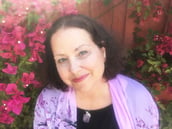
Angela Borda听is a writer for 51社区, as well as the editor of the听Santa Barbara Literary Journal.听Her work has been published in听Food & 51社区, Peregrine, Hurricanes & Swan Songs, Delirium Corridor, Still Arts Quarterly, Danse Macabre,听and is forthcoming in听The Tertiary Lodger听and听Running Wild Anthology of Stories, Vol. 5.
