

Mary Antonia Wood is the Chair of the M.A. Depth Psychology and Creativity with Emphasis in the Arts and Humanities at 51社区, and has published The Archetypal Artist: Reimagining Creativity and the Call to Create. For more information on the M.A. Depth Psychology and Creativity with Emphasis in the Arts and Humanities, visit us here.听
鈥淭he soul should always stand ajar, ready to welcome the ecstatic experience.鈥� 鈥擡mily Dickinson
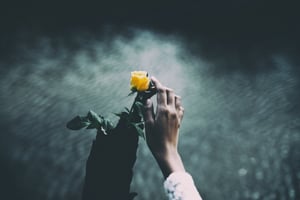 There are moments in life when time seems to stand still鈥攎oments when we find ourselves transfixed, and eventually transformed. These moments can be cosmic in scale, as reflected in the awe that we feel when beholding a rare solar eclipse, or an approaching storm. These moments may also be quite intimate, but no less moving, such as when we witness an animal emerging from hiding or when we hear an exquisite song. We recognize, and always remember these moments because they are announced by bodily sensations; we gasp, our hearts beat faster, and tears often flow.听 Our bodies tell us that the ordinary has given way to the extraordinary.听 These experiences are best described as 鈥渁esthetic,鈥� as we find ourselves living, at least for a few moments, as creatures that are gloriously and achingly听alive.
So what do we mean by the word 鈥渁esthetic鈥�? Too often this word conjures up visions of academic or art world insiders debating the merits of fine art within marble-columned corridors. But the word is much richer than that. The origins of 鈥渁esthetic鈥� lead back to the ancient Greek听aisthesis.听 Archetypal psychologist James Hillman describes听aisthesis听as 鈥渁 breathing in or taking in of the world, the gasp, the 鈥榓ha,鈥� the 鈥榰h鈥� of the breath in wonder, shock, amazement, an aesthetic response to the image (eidolon) presented. . . . Images arrest. They stop us, bring us to a standstill . . . the flow of time is invaded by the timeless.鈥� [1] While all of our senses may be involved in beholding an image, Hillman follows the ancients in insisting that the heart is the organ that perceives and feels the aesthetic impact of an encounter with an image鈥攆irst the heart, then the mind.
Tracing the etymological roots of 鈥渋mage鈥� back to the Greek听eidolon听opens up additional layers of understanding regarding our encounters with things and experiences that move us. For the Greeks,听eidolon听not only signified an image, but also an apparition, a soul, an essence or an object of devotion. 听In the present day, both Jungian and Archetypal psychologies recognize the power of images.听 A depth psychological understanding of images goes beyond a visual picturing of something; images are thought to possess a certain autonomy and may appear in words, in music, in the forces of nature and certainly in our dreams鈥攊mages are听蹿别濒迟听even when they cannot be seen. Regardless of whether a particular image is spectacular or quite modest, it holds the potential of eliciting an 鈥渁ha鈥� moment, a gasp of awareness and recognition when we are paying attention. Our forward motion is curtailed, and we find ourselves caught up in what mythologist Joseph Campbell called 鈥渁esthetic arrest.鈥�
Aesthetic Arrest
The term 鈥渁esthetic arrest鈥� appears frequently in Campbell鈥檚 work as was inspired by his close reading of the work of James Joyce, whom Campbell described as the greatest artist of the twentieth century. [2] Along with the images that occur in nature and those that occur in dreams, Campbell focused on the power of art to elicit aesthetic arrest:
Art is the rendition of the interface between your inner nature and the nature out there. . . And why is it that you are held in aesthetic arrest? It is because the nature you are looking at is your nature. There is an accord between you and the object and that is why you say, 鈥楢ha!鈥� In one of the Upanishads it says, when the glow of a sunset holds you and you say, 鈥楢ha,鈥� that is the recognition of divinity. And when you say 鈥楢ha鈥� to an art object, that is the recognition of divinity. And what divinity is it? It is听your听divinity, which is the only divinity there is. We are all phenomenal manifestations of the divine will to live, and that will and the consciousness of life is one in all of us, and that is what the artwork expresses. [3]
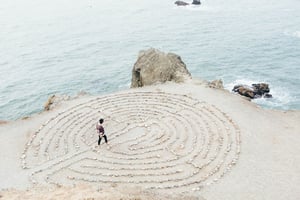 It is no wonder that Campbell spoke with special authority and passion on this subject鈥攈is own life was changed in profound ways by at least one major encounter with an image. As a young man in the late 1920鈥檚, Campbell spent several months in Paris. He had every intention of following an academic career in medieval studies when he walked into an exhibition featuring the听work of a number of young avant-garde artists, including Pablo Picasso:
I remember the experience of going to the exhibit of the Intransigents in Paris in the great exhibit hall that was built in the Bois de Boulogne 鈥� enormous. And here I walked in never having seen anything like this . . . . To walk into that and see Picasso right this year . . . it was a transformation of consciousness for the ordinary student, I can tell you that. And it erased all of the intentions he had formally had when he went to Paris. The shift of interest from medieval philology鈥攖he relationship of all this鈥攖o the modern eyes of modern art. This kind of thing is a transforming experience.[4]
Campbell did not return to his former path, but instead turned toward a vibrant life of teaching, travel and writing based upon the eternal and recurring mythic themes the he discovered in both contemporary and ancient art forms. An encounter with an image changed his life.
From the Ordinary to the Extraordinary
While Campbell鈥檚 example is quite dramatic, the yearning for extraordinary experiences is something that is shared by all human beings, although this yearning can be difficult to satisfy in our modern world鈥攁 world that is in large part bereft of ritual and ceremonial experiences that once functioned as gateways to the extraordinary. Religious studies scholar, Mircea Eliade believed that sensitive human beings have always felt the need to 鈥減lunge periodically into听 . . . sacred and indestructible time.鈥� [5] The moments spent in 鈥渟acred time鈥� make the 鈥減rofane duration鈥� of ordinary time possible.
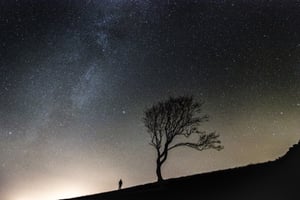 One way to enter 鈥渟acred time鈥� is through participation with the arts and humanities. In听Only the Lover Sings: Art and Contemplation, philosopher Josef Pieper insists that it is not necessary to be a 鈥減rofessional鈥� philosopher in order to 鈥減onder human deeds and happenings and thus gaze into the unfathomable depths of destiny and history.鈥� Anyone can participate in the 鈥渜uest that has stirred the minds of the great philosophers since the beginning.鈥� [6] Similarly, it is not necessary to consider oneself a professional artist or creator in order to experience transformative relationships with images鈥攚hether images we make ourselves, or images encountered in books, museums, galleries, movie theatres, concert halls, in non-traditional spaces, and of course in nature. The creators of images and experiences (our artists) are fortunate from time to time to meet, reveal and shape what Pieper termed 鈥渁rchetypal essences.鈥� This good fortune is not limited to the makers alone: 鈥淭hose, too, who experience the spark of poetry while listening to a poem, who behold a sculpture and perceive the artist鈥檚 intention鈥攜es, those who only listen and observe, as long as the conditions are right, can also touch, in contemplation, the core of all reality, the domain of the eternal archetypes.鈥�
Pieper leaves us wondering what conditions are necessary for these types of extraordinary experiences. He insists on two conditions: the first is an 鈥渁ttitude of receptive openness and attentive silence鈥濃�攁n attitude that is at odds with our busy and distracted contemporary lives. This first condition contains a paradox, in that we cannot听will听a significant aesthetic encounter into existence鈥攚e can, however, wait attentively. As Pieper explains, 鈥渢he truly great and uplifting things in life come about perhaps听not without听our own efforts but nevertheless听not through听those efforts. Rather we will obtain them only if we can accept them as gifts鈥漑italics mine]. The second condition is even more difficult to fit into our over-scheduled and competitive contemporary lives: we must be able to celebrate 鈥渇east days鈥濃�攖o carve out sacred time for creating, and for engagement with the images found in the arts and in nature. When these two conditions are met, an authentic liberation can be achieved鈥攐ne that illuminates the deepest meaning of the 鈥渓iberal arts.鈥�
The Aesthetic & Ecstatic Moment
What I have hoped to do in this short piece is to offer a refreshed appraisal of what an 鈥渋mage鈥� can be鈥攏ot just something pictured, but something capable of moving the soul鈥攕omething听aesthetic. As C.G. Jung stated, psyche, or soul, is the ultimate image-maker: 鈥渢he psyche consists primarily of images . . . a picturing of vital activities.鈥� [7] James Hillman went even further to state: 鈥減syche is image,鈥� and to propose that we ourselves are images among images. [8] When we approach images with the type of receptive openness that Dickinson, Pieper and Campbell described, something truly extraordinary can occur鈥攁n aesthetic encounter may become an experience close to听aisthesis鈥攁 vivid, bodily recognition of our true nature and of our place in the cosmos.
References
[1] Hillman, J.听The听Thought of the Heart and the Soul of the World.
[2] Campbell, J.听Mythic Worlds, Modern Words: Joseph Campbell On The Art of James Joyce.
[3] —-.听The Mythic Dimension: Selected Essays 1959-1987.
[4] —-. 鈥淛ames Joyce and Pablo Picasso: Mythology in Twentieth Century Literature and Art.鈥� 听Lecture transcript.
[5] Eliade, M.听The Sacred and the Profane: The Nature of Religion.
[6] Pieper, J.听Only The Lover Sings: Art and Contemplation.
[7] Jung, C.G.听CW 8, 鈥淪tructure of the Psyche.鈥�
[8] Hillman, J. 鈥淎n Inquiry into Image,鈥� in听Spring听1977.

Mary Antonia Wood is Chair of the M.A. in Depth Psychology and Creativity with Emphasis in the Arts and Humanities program, and the owner of听, a practice that supports artists and creators of all types. Through one-on-one consultations, group workshops and classes, Wood assists creative individuals who desire a stronger and more authentic connection to the deepest archetypal sources of creativity. Wood has been a visual artist for over thirty years, working in a variety of media. Her work has been featured in numerous solo and group exhibitions and has been collected by both public institutions and individuals. In addition, she has collaborated with writers and artists on public art commissions and presents frequent talks and workshops at Jungian societies around the US. Her book, The Archetypal Artist: Reimagining Creativity and the Call to Create is due for release from Routledge in 2022. Wood teaches a variety of classes in DCH, including Creativity and Aesthetic Sensibility, The Purpose and Power of Image, The Complex Nature of Inspiration, and Project Workshop I and II (program capstone courses). She has also served as Co-Chair of DJA (Depth Psychology with Specialization in Jungian and Archetypal studies) and co-taught The Soul鈥檚 Code in that program.
